6061 Aluminum — Cut to Size, No Minimum, Ships Fast
MetalNow Team · May 18, 2026
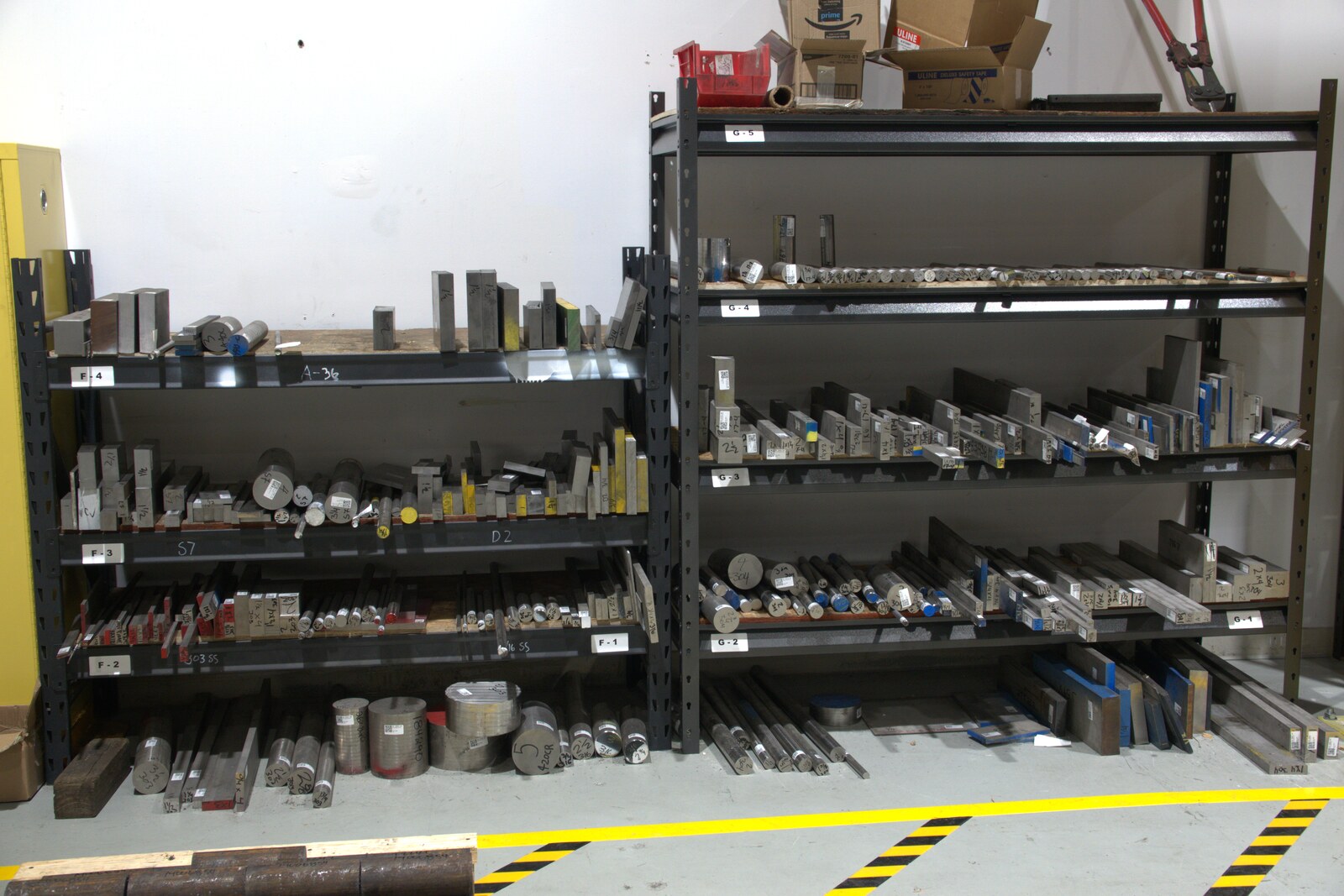
If you've been machining aluminum for any length of time, you already know 6061. It shows up on more prints than any other alloy, and for good reason. It machines cleanly, welds reasonably well, holds tolerances, and doesn't cost a fortune. When a print says "aluminum" without specifying a grade, 6061 is almost always the right assumption.
Here's everything worth knowing before you order.
Why 6061 Is the Default Aluminum Alloy
There are dozens of aluminum alloys, but most shops use two or three regularly. 6061 dominates for a few practical reasons.
It machines well with both HSS and carbide tooling. It cuts clean, doesn't gum up, produces manageable chips, and holds tight tolerances without fighting you. Beyond machinability, it has a good strength-to-weight ratio, can be welded with standard MIG or TIG techniques, anodizes nicely for both functional and decorative finishes, and is available virtually everywhere in every form factor.
The trade-off is that 6061 isn't the strongest aluminum you can buy. If your application needs maximum tensile strength, you're probably looking at 7075. But for most machine shop and fabrication work, 6061 is exactly right.
T6 vs T651: What the Temper Actually Means
Almost all 6061 stock comes in either T6 or T651 temper. The number after the dash describes the heat treatment condition the material is in when you receive it.
T6
Solution heat-treated and artificially aged to peak strength. This is the standard temper for most 6061 stock shapes. When someone says "6061," they almost always mean T6.
T651
Same heat treatment as T6, but with a stress-relief step done by controlled stretching after aging. This reduces residual internal stresses in the material. It matters when you're machining large sections down to thinner cross-sections, where stress release during cutting can cause distortion.
For general machining, T6 is fine. If you're taking a thick plate down to a thin section and need it to stay flat through the process, T651 is worth asking for.
Browse 6061 aluminum in round bar, flat bar, plate, and sheet. Instant pricing, cut to your exact dimensions.
Shop 6061 Aluminum →Available Forms and What Each Is Used For
Round Bar
The most common form for turned parts. Shafts, pins, spacers, bushings, threaded inserts. Available from small diameters up through large stock for heavy components.
Flat Bar
Good for brackets, structural members, and smaller plates where the width matches a stock size. Often more economical than ordering plate and having it sawn down.
Plate
For fixtures, tooling plates, larger flat parts, and structural components. We cut to your exact dimensions so you're not stuck with leftover material.
Sheet
Thinner than plate. Common in enclosures, panels, guards, and anything that gets formed or bent.
Square Bar
Used in fixture work and applications where round bar geometry doesn't fit. Less common but available in standard sizes.
Common Applications
- CNC machined components and precision parts
- Aerospace and automotive structural brackets
- Robotics frames and chassis components
- Fixtures, jigs, and tooling plates
- Electronics housings and heat sinks
- Marine hardware and fittings
- Medical equipment components
When 6061 Isn't the Right Choice
6061 is a great default, but a few situations call for something different.
If the part needs maximum strength and weight is critical, look at 7075. It's roughly twice the tensile strength of 6061 but doesn't weld and costs more. For extrusion profiles and architectural shapes, 6063 is the better pick because it produces a cleaner anodized finish. In saltwater or chloride-heavy environments, 5052 or 5083 hold up better than 6061 over time. And for flatness-critical tooling plates, Mic-6 cast aluminum has tighter as-milled flatness tolerances than rolled 6061 plate.
Frequently Asked Questions
Does 6061 rust?
Aluminum doesn't rust the way steel does. 6061 can oxidize and develop a dull surface film, but this actually acts as a protective layer that slows further corrosion. In most environments, it holds up well without any coating.
What's the difference between 6061 and 6063?
6061 has higher strength and is better for machined parts. 6063 is designed for extrusion and gives a cleaner surface finish, which is why it's used for architectural and window frame extrusions. For machined parts, 6061 is almost always the right call.
Can I weld 6061?
Yes, with 4043 or 5356 filler rod using MIG or TIG. Keep in mind that welding reduces the temper condition in the heat-affected zone. If the weld area needs to be as strong as the base material, you may need to redesign around that or re-heat treat after welding.
Is 6061 food safe?
With the right surface treatment, yes. Anodized 6061 is widely used in food processing equipment. Bare aluminum isn't recommended for direct food contact. Check with your anodizer on the finish spec for your application.
Order 6061 aluminum cut to your exact dimensions.
Instant pricing. No minimums. Round bar, flat bar, plate, and sheet.
Get a Price Now →