The Truth About Ordering Metal in Small Quantities
MetalNow Team · May 10, 2026
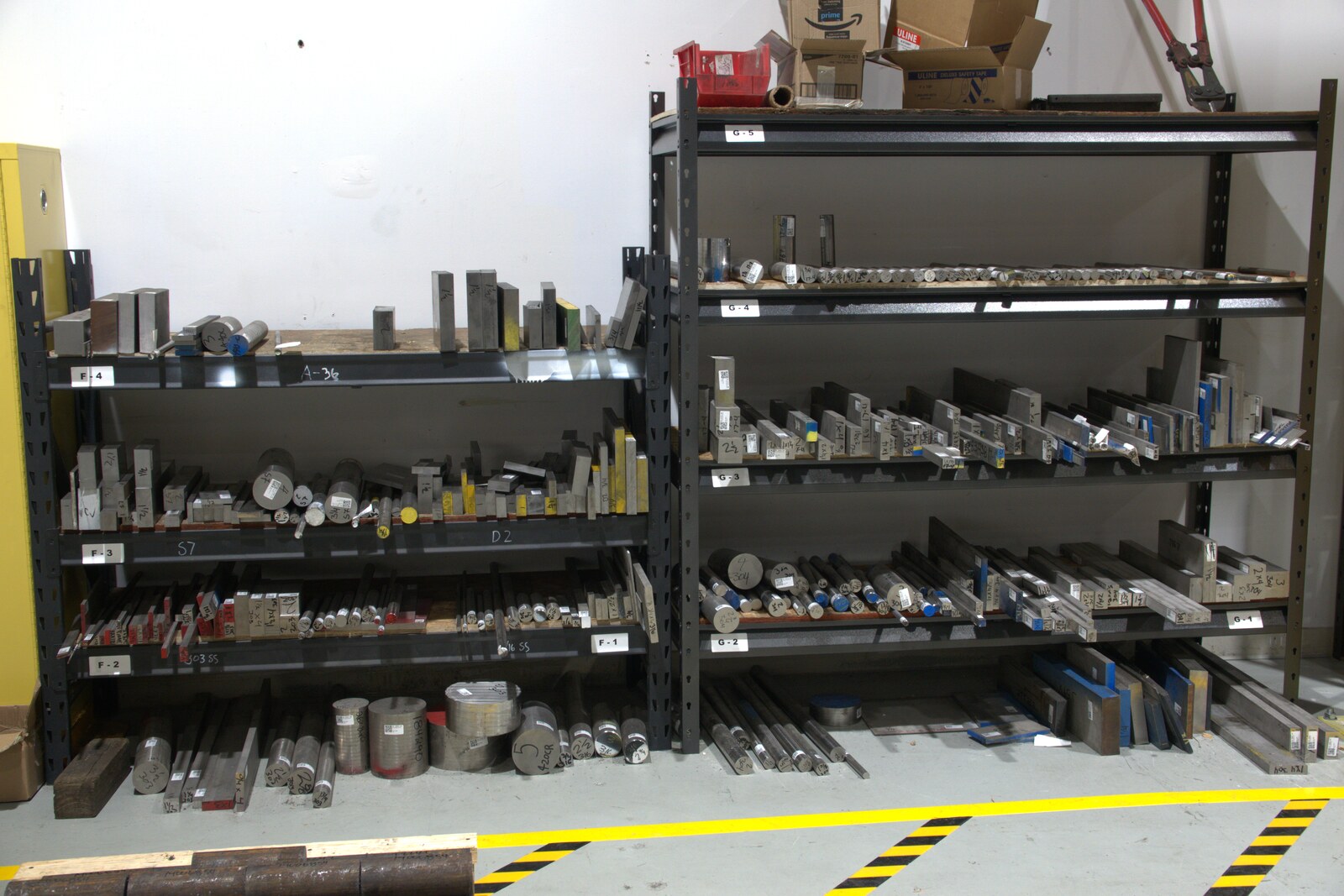
If you've ever called a metal distributor for a single piece of flat bar or a few feet of round stock, you probably know how it goes. Sometimes they'll help you. More often you get a polite "our minimum is a full bar" or a quote where one piece costs nearly as much as a whole bundle.
It's not that those distributors are doing anything wrong. Their business model is built around volume, and that works fine for their core customers. The problem is that a lot of machine shops, fabricators, and small manufacturers don't need volume. They need the right material in the right amount for the job in front of them.
Why Most Metal Suppliers Have Minimums
It comes down to logistics and margin. Cutting a single piece takes almost the same amount of setup and labor as cutting ten. Processing a one-piece order has nearly the same overhead as a fifty-piece order. For distributors built around high-volume accounts, small orders aren't profitable to handle well, and that shows up in the experience.
The result is that small shops end up doing one of two things: buying more material than a job requires just to hit the minimum, or spending time hunting for a supplier willing to work with them. Both options cost money.
The Real Cost of Over-Ordering
It's easy to underestimate what over-ordering actually costs. When you buy more material than a job needs, you're paying for the material itself (obviously), plus storage space that could be used for productive work, cash tied up in inventory that isn't generating revenue, time spent tracking and moving leftover stock around, and scrap value loss when material that never gets used finally gets cleaned out.
For shops running on tight margins, those costs add up. Ordering exactly what a job calls for eliminates most of them.
What "No Minimum" Actually Means Day-to-Day
When a supplier genuinely has no minimum, the workflow is different. You quote jobs based on exactly what they need, not what you're forced to buy. You order when work comes in rather than speculatively ahead of demand. Your floor stays cleaner. Your cash isn't tied up in material that may sit for months.
It sounds simple, but it's a genuine operational shift for shops that make the change.
Get a price on any quantity right now. One piece or one hundred, no minimum required.
Browse the Catalog →What to Look For in a Small Quantity Metal Supplier
Not every supplier that says "no minimum" delivers a smooth experience on small orders. A few things separate the ones that actually work:
Online Pricing Without a Quote Process
If you have to call or email for a price on a single piece, that friction alone defeats the purpose. A supplier that works well for small orders will show you the price right away, based on your exact dimensions, before you commit to anything.
Cut-to-Size Service
Standard lengths don't always match what a job needs. A good small-order supplier cuts to your exact dimension. You shouldn't have to buy a 12-foot bar and deal with the remainder yourself.
Transparent Inventory
You shouldn't find out something is backordered after you've placed the order. Knowing what's available upfront saves a phone call and a delay.
Fast Turnaround
Small orders shouldn't take longer to process than large ones. If a one-piece order takes a week, it defeats the purpose of ordering small in the first place.
Reasonable Per-Piece Pricing
Some suppliers technically accept small orders but charge a premium that makes it impractical. Per-unit cost should be fair regardless of what you're ordering.
Which Metals Are Most Often Ordered in Small Quantities
The materials machine shops and fabricators reach for most often in small amounts:
- 6061 aluminum in round bar, flat bar, plate, and sheet. The most commonly machined aluminum alloy, used in everything from brackets to structural components.
- Hot rolled steel in flat bar, round bar, and square bar. Low cost and widely used for general fabrication work.
- 4140 alloy steel for shafts, tooling, and high-stress components. Often ordered in single bars or short sections.
- 304 stainless steel for food processing, medical, and marine applications where corrosion resistance matters.
- Brass (360 free-machining) for fittings, valves, and anything decorative.
- Copper (110) for electrical and thermal applications, usually in small pieces.
Frequently Asked Questions
Is it more expensive to order small quantities?
At MetalNow, the per-pound price is the same regardless of how much you order. There's no small-order surcharge. You pay for what you order, cut to size.
What's the smallest order you'll process?
There's no floor. One piece, one cut, that's a normal order. If the material is in stock, we'll cut and ship or have it ready for pickup.
Can I mix different metals in one order?
Yes. You can add aluminum, steel, stainless, and brass to the same cart and check out together.
Do small orders ship as fast as large ones?
Yes. Order processing doesn't change based on quantity. Small orders go through the same workflow as large ones.
Order exactly what your job calls for.
No minimums. Instant pricing. Cut to your dimensions.
Get a Price Now →