What Is 4140 Steel Good For? (And How to Order It Online)
MetalNow Team · May 14, 2026
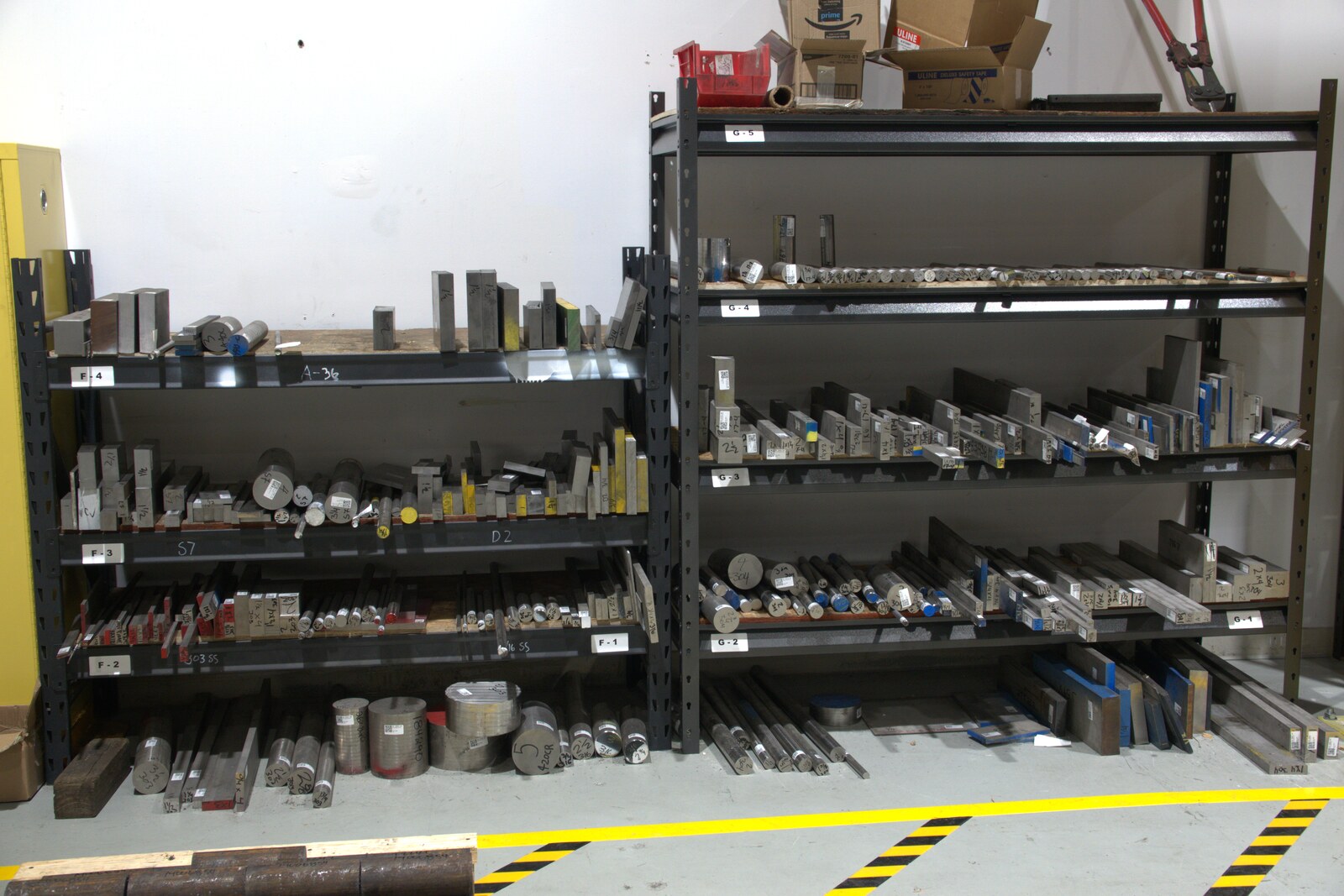
Ask experienced machinists what their go-to alloy steel is, and 4140 comes up constantly. Not because it's exotic or expensive, but because it covers an enormous range of applications without requiring you to spec a specialty material.
Good strength, good toughness, machines well when annealed, and responds predictably to heat treatment. For shafts, tooling, dies, and anything that takes a beating, it's hard to beat.
What Is 4140 Steel?
4140 is a chromium-molybdenum alloy steel. The designation follows the AISI system: "41" indicates the chromium-molybdenum family, and "40" indicates approximately 0.40% carbon content.
The alloying elements each do specific things. Chromium (around 1%) improves hardenability, wear resistance, and mild corrosion resistance. Molybdenum (around 0.2%) increases strength at elevated temperatures, improves toughness, and reduces temper brittleness. The carbon content gives it the hardness potential when heat treated.
In the annealed condition, tensile strength runs around 95,000 psi. Fully heat treated and tempered, you can push that well past 200,000 psi depending on the temper temperature. That range is a big part of why 4140 is so versatile.
What 4140 Steel Is Actually Used For
The application list is broad. 4140 shows up anywhere that strength, toughness, and fatigue resistance matter together.
- Shafts and axles for handling torsional load and cyclic stress without fatiguing quickly
- Gears and sprockets where strength and wear resistance matter for power transmission
- Tooling and fixturing because it's rigid, stable, and holds dimensions under load
- Hydraulic cylinders and rams that need tight tolerances and surface hardness at the bore
- High-strength fasteners including many Grade 8 and above bolts
- Die components and punch tooling that see repeated high-cycle impact
- Gun barrels and firearm components where it's one of the most common materials used
- Oil and gas downhole equipment for handling the combination of pressure, stress, and mild corrosion
Order 4140 steel cut to your exact length. Annealed and prehard, instant pricing, no minimum.
Shop 4140 Steel →Annealed vs Prehard: Which Do You Need?
This is the question we get most often about 4140, and the answer depends on what happens to the part after machining.
Annealed 4140
Annealed means the steel has been heat-treated to relieve internal stresses and soften the material, usually to around 20 HRC or softer. It's much easier to machine: faster speeds, longer tool life, less demanding on your setup.
Choose annealed when you plan to heat treat the finished part, when the geometry is complex and you need every advantage you can get on machinability, or when you're removing a lot of material and want to preserve tooling life.
Prehard 4140
Prehard means the material was already heat treated at the mill to roughly 28-34 HRC before it reaches you. It's harder to machine but you skip the heat treatment step entirely.
Choose prehard when you need strength and hardness right out of the machine without a secondary heat treat, when you're making tooling or fixtures and sending parts out isn't practical, or when the geometry is simple enough that the harder cut isn't a significant issue.
When in doubt, go with annealed. It's more flexible and gives you options on the back end.
What to Expect When Machining 4140
Annealed 4140 machines well with both HSS and carbide tooling. It's similar in feel to 1045 or 4130 in terms of how it cuts. Clean chips, doesn't work-harden aggressively, holds tolerance. You can run reasonable speeds and feeds without major issues.
Prehard 4140 at 28-34 HRC is a different story. You'll need carbide, a rigid setup, slower speeds, and a good supply of cutting fluid. Expect more tool wear than you'd see on the same part in annealed stock. Intermittent cuts are hard on inserts, so reduce depth of cut when possible. It's doable on most CNC machines, but plan your tooling accordingly.
How Does 4140 Compare to Similar Steels?
Versus 1018 (mild steel): 1018 is cheaper and easier to machine, but has far lower strength and no real hardenability. For parts that need strength under load, 1018 is a downgrade.
Versus 4340: 4340 adds nickel to the alloy, improving toughness at very high hardness levels. It's used in aerospace and extremely high-stress applications. Significantly more expensive. For most machine shop work, 4140 is sufficient.
Versus H13 tool steel: H13 is a hot work tool steel built for elevated temperatures, like die casting dies and hot forming tooling. 4140 doesn't have that heat resistance. If your application involves sustained high temperatures, H13 is the right material.
Frequently Asked Questions
Does 4140 rust?
Yes. 4140 is an alloy steel, not stainless. The chromium content gives it slightly better corrosion resistance than plain carbon steel, but it will rust without a protective finish. Coat, plate, or paint finished parts if corrosion is a concern.
Can you weld 4140?
Yes, but it requires preheat, typically 300 to 500 degrees F depending on thickness, and controlled post-weld heat treatment to avoid cracking in the heat-affected zone. Don't weld 4140 cold without a process plan.
What's the best way to harden 4140?
4140 is through-hardenable. Standard process is oil quenching from austenitizing temperature around 1550 degrees F, followed by tempering at your target hardness. Nitriding also works well and gives excellent surface hardness with minimal distortion. Work with a certified heat treater for production parts.
Is 4140 magnetic?
Yes. 4140 is magnetic in all conditions.
Order 4140 steel cut to your exact size.
Annealed and prehard available. Instant pricing. No minimums.
Get a Price Now →